+34 966 497 016
 +34 663 30 61 74


 Continue with Google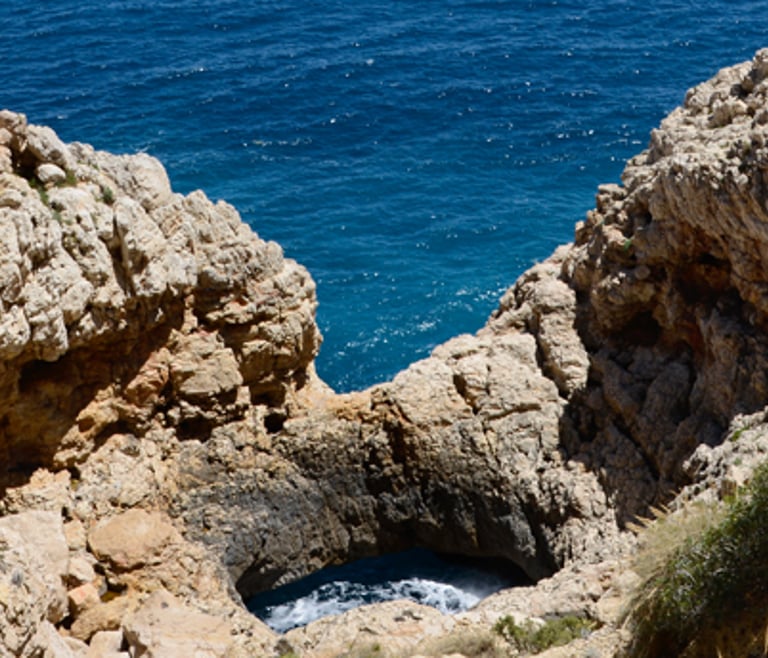
Coastal caves of Benitatxell
Old fishermen's shelters, smugglers' hideouts, corners marked by wind and salt.
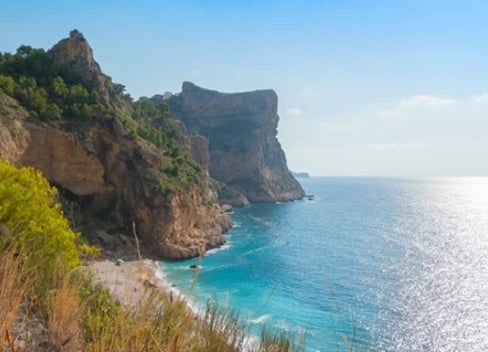
The coast of Benitatxell is rugged, wild, and honest. Just like its caves. Many of them were formed by the power of the sea. Others were touched by human hands, to fish, to protect, to hide, or simply to be. What they all have in common is that, if you know how to see, they tell you something.
Here are some of the most well-known, and others that are not so much.
Cova dels Arcs
The most photographed. On one side of the Cala del Moraig, this cave with natural arches has become an icon. The sunlight enters from above and transforms everything. It’s not just for posing, it’s a place that truly impresses.
Cova les Morretes
Just below the Moraig cliff. Formerly converted into a dwelling, it still preserves an oven, an animal area, and details that speak of past lives. It’s not an easy visit, but a time capsule.
Cova del Morro del Bou
Near Cala Llebeig, this cave is still in use by fishermen when the weather gets rough. It has a space to make fire, to shelter, and to look at the sea without getting wet. Functional, straightforward, without adornments.
Cova del "ti Toni el Senyalat"
One of the largest: 8 meters wide and 3.5 meters deep. Isolated, with a wooden door, and very well preserved. Inside, you can stand; outside, only the sea can be heard. If you seek quiet history, this is your cave.
Cova de "Pepet del Morret"
Small and very discreet, it only served to sleep or store things. The outside area served as an improvised dining area, with stones as tables and chairs, fire, and a view that didn’t need decoration. A tunnel leads to another neighboring cave.
Cova del "ti Domingo l’Abiar"
More open and exposed. It was covered with a tarp and also used as animal refuge. Nearby, there is an inscription that says 1937, but its story surely began long before.
What you need to know
 Location: Benitachell Cliffs
 Recommended schedule: Morning
 Duration: Half-day full route minimum
 Effort level: Medium to high
 Access: Foot only
 Ideal for: Adventurers, explorers, history lovers
Accommodations in Benitachell

 Exclusive
 3 bed.
  5
5

 Recommended
 3,0 km


You might also be interested in Benitachell