



 +34 966 497 016
 +34 663 30 61 74


 Continue with Google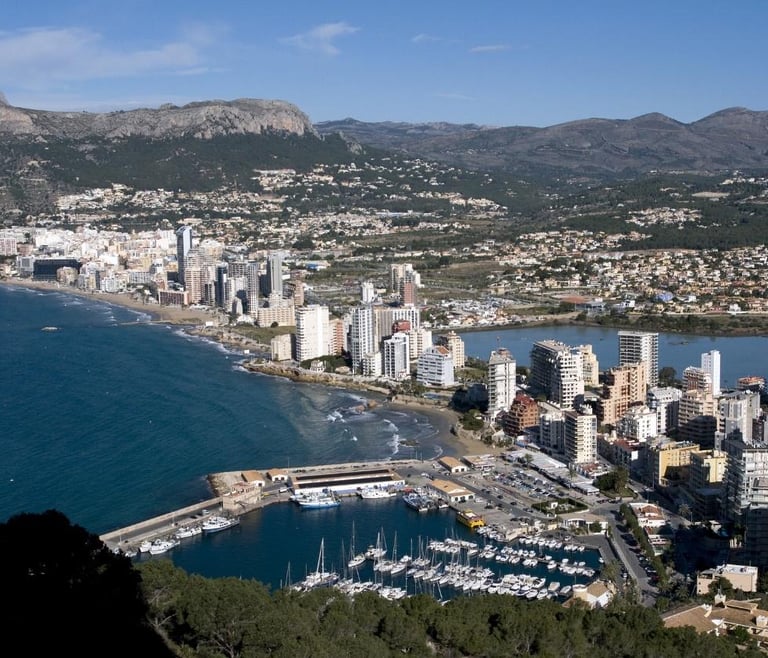
Baños de la Reina in Calpe: discover the legend and charm of this corner
The town, with its calm bay beneath the majestic silhouette of the Peñon de Ifach, is home to a fascinating historic enclave: the Queen’s Baths. More than just a natural pool, these baths are wrapped in a legend that adds mystery to a landscape you can enjoy. Want to learn more about the charm of the Queen’s Baths in Calpe? Well, we’ll tell you!
What are the Queen’s Baths?
The name is inspired by the legend of a Moorish queen who escaped from the palace through tunnels to enjoy a swim in the sea in these natural pools, but, in reality, these baths have a more functional history. The Queen’s Baths in Calpe are actually ancient Roman fish farms dating back nearly 2000 years. The channels of these Roman fish farms allowed the entry of fish, which were later stored in the water basins created and fed for human consumption.
History of the Queen’s Baths
The archaeological site of the Queen’s Baths consists of three well-defined parts that tell the story of their past:
Vicus Romano
Located just behind the beach, the Vicus Romano was a Roman villa that has sadly been excavated only 25%. Currently, it is closed and overgrown, and cannot be visited. Right next to this area is a 19th-century mill (Molino Morelló), making this space at least visually striking.
Termas de la Muntanyeta
Situated atop a spur, the thermal complex of la Muntanyeta offers a glimpse into Roman life with its baths and its excellent engineering. In this site, you can see: a natatio of cold water (frigidarium). Adjacent to this area, there are several ovens designed to maintain the proper temperature in the hot rooms (caldarium) and also the temperate (tepidarium).
Roman engineers implemented a clever heating system based on raised hollow floors on brick columns, known as pilae, and walls with air chambers built using ceramic tubes, called tubuli. This design enabled efficient circulation of heat throughout the different rooms, keeping them warm. Don’t you think they prefigured radiant floor heating?
Roman Nurseries of Baños de la Reina in Calpe
Finally, we arrive at the most well-known area for bathers, these nurseries, or piscinae, excavated into the sandstone rock, forming a large rectangular deposit of 165 m². They had channels that allowed water circulation and gates to control the flow. As mentioned before, these nurseries were used for breeding live fish, which were fed to be later consumed by humans.
How to get to the Queen’s Baths?
It’s easy to access this place via the Paseo Marítimo Infanta Elena. From Cala Morelló, you can see the Queen’s Baths and the available access points for swimming.
Can you park near the Queen’s Baths?
Getting to the Queen’s Baths is made easier by the possibility of parking on nearby streets, such as Calle Italia or Avd. Europa. However, it’s important to note that many of these streets are paid parking.
In high season, finding a spot becomes more difficult, so public transportation (bus line 1 passes by there), or a pleasant walk, might be just what you need to enjoy a spectacular bathing day.
Don’t you think it’s a fascinating area to explore? With its calm, shallow waters, the Queen’s Baths in Calpe offer a unique experience for the whole family. Additionally, it is an ideal spot for snorkeling and seeing schools of fish, thanks to the crystal-clear waters of the area. Although beautiful like many legends, the Moorish queen’s legend fades in front of the reality and the rich history and culture that this site holds today. Still, it’s not the only corner of the town full of beauty and patrimonial value, but to discover the rest, we invite you to visit the area. For that, there’s nothing better than staying in one of the wonderful villas in Calpe with pool from villasguzman.com and enjoying a home that lives up to your expectations and the beauty of the area. We look forward to welcoming you!

 3 bed.
  1,7 km
  4.8
4.8


