



 +34 966 497 016
 +34 663 30 61 74


 Continue with Google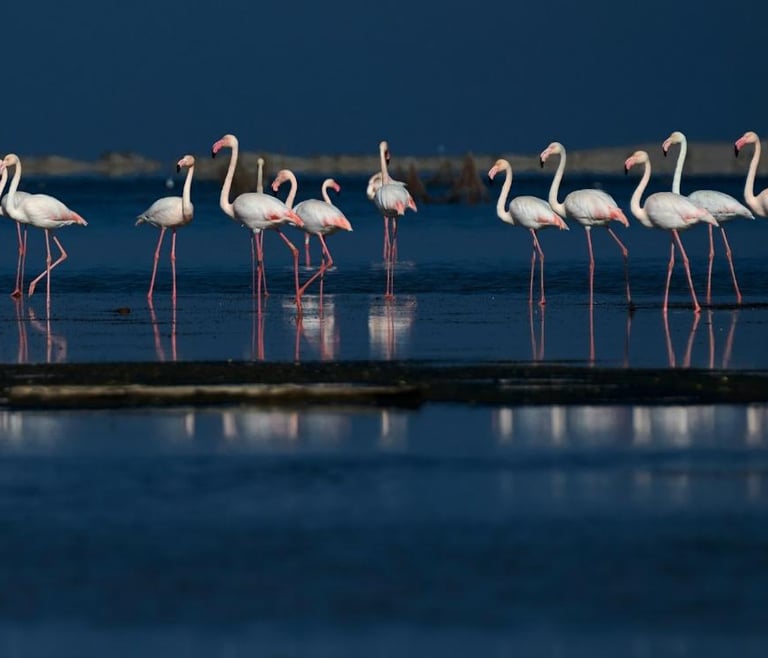
Do you know the Calpe salt flats? Everything you need to know
Set in the heart of Calpe, facing the majestic Peñón de Ifach, the Calpe salt flats are a true natural treasure that many travelers still do not deeply know. If you are planning a getaway to the Costa Blanca and want to combine nature, history, and birdwatching, this place cannot be missing from your itinerary.
What are the Calpe salt flats
The Calpe salt flats are an ancient salt exploitation located in an endorheic depression, meaning the water has no outlet to the sea or rivers and accumulates near the Mediterranean coast. This wetland, surrounded by urban areas and simultaneously connected to the Peñón de Ifach Natural Park, extends over approximately 40 hectares. Although salt is no longer commercially extracted today, this ecosystem is preserved as a valuable protected natural space.
It is a natural saline environment that has been exploited since ancient times for its geological features. Unlike many artificial salt flats, Calpe's formed spontaneously thanks to water accumulation in an impermeable clayey land, which led to salt sedimentation as the water evaporated.
A bit of history
The exploitation of the Calpe salt flats dates back, at least, to the Roman era. Archaeological remains suggest its use as a salt source during the times of the Empire when this resource was essential for food preservation. However, it was during the Middle Ages and up to the 20th century when it experienced its greatest boom, becoming an important economic resource for the local population.
In the 20th century, activity waned and systematic salt extraction was finally abandoned. Fortunately, far from disappearing, this natural space was protected for its invaluable ecological value. Today, it is part of an integrated urban environment and serves as a site for studies, walks, and guided visits.
Ecological importance and biodiversity
Although many people associate Calpe exclusively with white sandy beaches and crystal-clear coves, the Calpe salt flats represent a balance between urban and wild areas, where nature makes its way among us.
This wetland hosts rich biodiversity, especially concerning aquatic birds. In fact, it is one of the best areas on the Costa Blanca for birdwatching. Among the most emblematic are flamingos, which have become a symbol of this space. Additionally, it is common to see stilts, great herons, seagulls, avocets, and many migratory species that find here a stopover and feeding point during their journeys between Africa and Europe.
The flora is also notable, with a significant presence of halophilic vegetation adapted to saline environments. This ecological balance, maintained even with human presence nearby, demonstrates the resilience of the ecosystem and its value as a natural laboratory for biological and environmental studies.
Can the Calpe salt flats be visited?
Yes, the Calpe salt flats can be visited and are actually a highly recommended stop to enjoy the Costa Blanca from a more natural and tranquil perspective. Currently, there is a walking trail that surrounds the salt flats and allows you to explore them on foot safely. The path is well signposted, accessible, and can be completed in less than an hour. This makes it a perfect activity for both adults and families with children. The views of Peñón de Ifach from certain parts of the route are simply spectacular.
Additionally, if your passion is nature photography or birdwatching, this is an ideal place to bring your binoculars or telephoto camera. During off-peak hours —such as dawn or dusk— more activity among the birds can be observed.
At certain times of the year, the Calpe City Council organizes interpretive guided tours, offering an excellent opportunity to learn in depth about the history and environmental richness of the area.
How to get there and what to keep in mind?
The Calpe salt flats are located almost in the city center, very close to the promenade of Levante Beach and the access to Peñón de Ifach. They can be easily reached on foot from many parts of the town. For those traveling by car, there are public parking areas nearby, although in high season it may be more comfortable to park a bit farther and enjoy a walk to the salt flats.
It is important to respect the space regulations: do not stray from the designated paths, do not feed the animals, do not litter, and of course, keep noise to a minimum to avoid disturbing the wildlife. Remember that you are in a protected environment and its preservation depends on the respect of every visitor.
The Calpe salt flats are much more than a simple lagoon by the sea. They represent an ecosystem full of history and beauty. If you are organizing your stay on the Costa Blanca and want to combine relaxation, nature, and culture, be sure to include a visit to this very special corner. And to complete the experience, from Villas Guzmán we offer you exclusive vacation rentals in Calpe and its surroundings, perfect for disconnecting and experiencing a different kind of holiday. Contact us and let us help you find the perfect villa for you and yours.

 3 bed.
  1,7 km
  4.8
4.8


